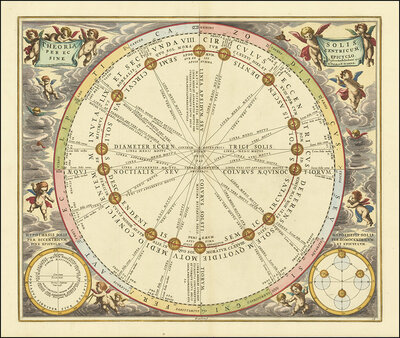
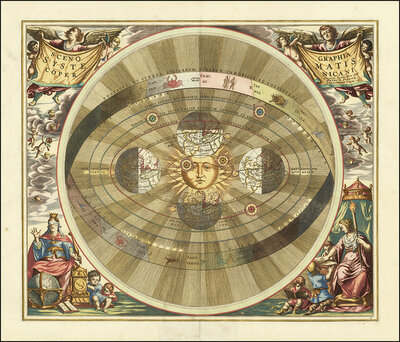
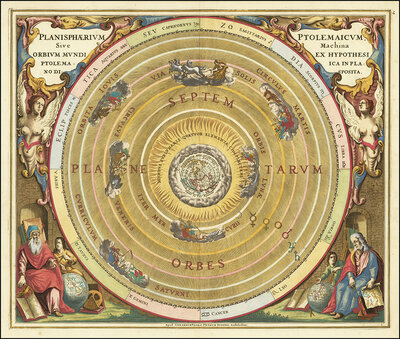
Historical illustration of the orbits of Mercury and Venus, which demonstrates the geoheliocentric world view according to Tycho Brahe. Theoria et Mercurii Veneris Cursus, theory and career of Mercury and Venus and depicts Mercury and Venus orbiting the S

Choose license
Print License 450,00 €

Check every pixel before you buy – you get exactly the file you see in the zoom.

Payment by PayPal or bank transfer (in advance)

Create quote (PDF)

Get a PDF quote for this image right away – for example for approval in your company. We will also send it to you by email.

Licence *

We use your details only to create and send this quote. Privacy policy · * required field

Ask about a project with this image Individual sizes, exclusive licences, print advice
✓ Original capture – genuine gigapixel photography, no AI upscaling
✓ Download link by e-mail – After payment we generate your original file. You receive the download link by e-mail, usually within a few minutes, at the latest after about an hour.
✓ Legally secure license – for print, stretch ceilings & wall design
✓ Personal support – For questions or problems, write to us or call us: info@gigapixel.gmbh+49 3643 25146-80
File Dimensions:
13570 * 11482 px
File Format:
TIF
Photographer:
imageBROKER/Sunny Celeste
Historical astronomical diagram with concentric circles and Latin inscriptions. Baroque angels and allegorical figures frame the scientific illustration. Cream, gold, and gray tones dominate.

Similar Images

Historical presentation of the Tychonic world system, Tychonis Calculus, which was made by Andreas Cellarius for his famous atlas Harmonia Macrocosmica after 1600. The Tychonic System is a geo-heliocentric model in which the Earth is at the center, the Su
🖼 0.96 abstract
Historical presentation of the Tychonic world system, Tychonis Calculus, which was made by Andreas Cellarius for his famous atlas Harmonia Macrocosmica after 1600. The Tychonic System is a geo-heliocentric model in which the Earth is at the center, the Su

imageBROKER/Sunny Celeste 12 783 × 10 400 px TIF

Historical celestial map depicting geocentric planetary orbits with concentric circles around Earth. Elaborately ornate cartouches with Latin inscriptions,…
Details
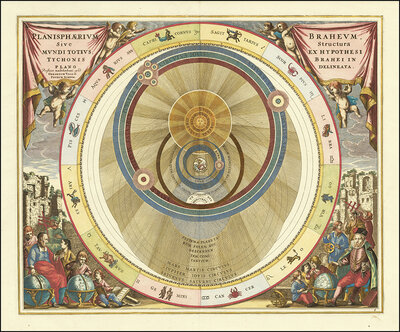
A 17th century illustration of Tycho Brahe's geo-heliocentric model of the universe. The image is from Andreas Cellarius' Harmonia Macrocosmica atlas and shows the Earth in the center around which the Moon and Sun revolve. At the same time, the planets Me
🖼 0.96 art
A 17th century illustration of Tycho Brahe's geo-heliocentric model of the universe. The image is from Andreas Cellarius' Harmonia Macrocosmica atlas and shows the Earth in the center around which the Moon and Sun revolve. At the same time, the planets Me

imageBROKER/Sunny Celeste 13 184 × 10 946 px TIF

Historic 16th-century cosmological diagram depicting the geocentric universe with concentric planetary orbits around Earth. Magnificent copperplate engraving…
Details
Historical astronomical map Theoria Lunae, Eius Motum per Eccentricum et Epicyclum Demonstrans, The theory of the Moon, which demonstrates its movement through eccentricum and epicycle. It is by Andreas Cellarius and was first published in 1660 in the fam
🖼 0.95 abstract
Historical astronomical map Theoria Lunae, Eius Motum per Eccentricum et Epicyclum Demonstrans, The theory of the Moon, which demonstrates its movement through eccentricum and epicycle. It is by Andreas Cellarius and was first published in 1660 in the fam

imageBROKER/Sunny Celeste 12 583 × 10 580 px TIF

Historical cosmological diagram illustration with geocentric planetary orbits, framed by putti and mythological figures. Antique coloring in cream, rose and…
Details
Historical presentation of the tychonic world view created by Andreas Cellarius around 1660. The tychonic system, developed by Tycho Brahe, is a geo-heliocentric model in which the earth is at the center, the sun and the moon orbit the earth, but all othe
🖼 0.95 art
Historical presentation of the tychonic world view created by Andreas Cellarius around 1660. The tychonic system, developed by Tycho Brahe, is a geo-heliocentric model in which the earth is at the center, the sun and the moon orbit the earth, but all othe

imageBROKER/Sunny Celeste 13 757 × 11 424 px TIF

Historical astronomical diagram of the Ptolemaic universe with concentric planetary spheres. Beige-cream background with ornamental frames, Latin inscriptions…
Details
Historical sky map with the title Theoria Solis per Eccentricum sine Epicyclo, Theory of the Sun by Eccentric without Epicycles. The illustration is from the famous sky atlas Harmonia Macrocosmica by Andreas Cellarius, published 1660-1661. It illustrates
🖼 0.95 abstract
Historical sky map with the title Theoria Solis per Eccentricum sine Epicyclo, Theory of the Sun by Eccentric without Epicycles. The illustration is from the famous sky atlas Harmonia Macrocosmica by Andreas Cellarius, published 1660-1661. It illustrates

imageBROKER/Sunny Celeste 13 386 × 11 330 px TIF

Historic astronomical radial diagram map (Theoria Planetarum) featuring concentric planetary orbits, detailed Latin inscriptions and angelic decorations.…
Details
The movements of Venus and Mercury, 1660, digital improved reproduction of a work by Andreas Cellarius (1596-1665), a Dutch-German cartographer and cosmographer best known for his Harmonia Macrocosmica from 1660, digital improved reproduction
🖼 0.95 abstract
The movements of Venus and Mercury, 1660, digital improved reproduction of a work by Andreas Cellarius (1596-1665), a Dutch-German cartographer and cosmographer best known for his Harmonia Macrocosmica from 1660, digital improved reproduction

imageBROKER/Sunny Celeste 13 570 × 11 482 px TIF

The Movements of Venus and Mercury, 1660, copper engraving by Andreas Cellarius from the star atlas Harmonia Macrocosmica. High-resolution digitization at 13570…
Details
Planisphaerium Arateum, part of the famous celestial atlas Harmonia Macrocosmica by Andreas Cellarius. Description The map shows the geocentric world view based on the observations and writings of the ancient Greek poet and astronomer Aratos (ca. 315 - 24
🖼 0.95 art
Planisphaerium Arateum, part of the famous celestial atlas Harmonia Macrocosmica by Andreas Cellarius. Description The map shows the geocentric world view based on the observations and writings of the ancient Greek poet and astronomer Aratos (ca. 315 - 24

imageBROKER/Sunny Celeste 13 339 × 11 285 px TIF

Historic cosmological representation of geocentric worldview with concentric orbital system, planetary spheres and mythological figures. Magnificent Renaissance…
Details
Scenographia Systematis Copernicani, scenography of the Copernican system, a celestial map illustrating the heliocentric world view, from the atlas Harmonia Macrocosmica seu Atlas universalis et novus published in 1660 by Andreas Cellarius, a German-Dutch
🖼 0.95 art
Scenographia Systematis Copernicani, scenography of the Copernican system, a celestial map illustrating the heliocentric world view, from the atlas Harmonia Macrocosmica seu Atlas universalis et novus published in 1660 by Andreas Cellarius, a German-Dutch

imageBROKER/Sunny Celeste 13 430 × 11 486 px TIF

Historical cosmological diagram depicting geocentric worldview. Central sun figure surrounded by concentric planetary orbits, richly decorated with angels,…
Details
Theoria Trium Superiorum Planetarum sky map, theory of the three upper planets, by Andreas Cellarius. The original map is from his famous atlas Harmonia Macrocosmica from around 1660. The engraving illustrates the apparent movements of the three upper pla
🖼 0.95 art
Theoria Trium Superiorum Planetarum sky map, theory of the three upper planets, by Andreas Cellarius. The original map is from his famous atlas Harmonia Macrocosmica from around 1660. The engraving illustrates the apparent movements of the three upper pla

imageBROKER/Sunny Celeste 12 629 × 10 652 px TIF

Historical astronomical diagram featuring concentric planetary circles with Latin inscriptions and decorative baroque cherubs. Cream-colored background,…
Details
Historical map titled Scenographia Systematis Copernicani, scenography of the Copernican system. It comes from the Harmonia Macrocosmica sky atlas by Andreas Cellarius, which was published in 1660/1661 and represents Nicolaus Copernicus's heliocentric wor
🖼 0.95 art
Historical map titled Scenographia Systematis Copernicani, scenography of the Copernican system. It comes from the Harmonia Macrocosmica sky atlas by Andreas Cellarius, which was published in 1660/1661 and represents Nicolaus Copernicus's heliocentric wor

imageBROKER/Sunny Celeste 12 899 × 11 082 px TIF

Historical colored engraving depicting the geocentric cosmological model with the sun at center surrounded by concentric orbital rings. Allegorical framed…
Details
Presentation of the geocentric world view based on Claudius Ptolemy, as illustrated by Andreas Cellarius in 1660. This model assumes that the Earth is at the center of the universe and that all celestial bodies orbit it. The illustration shows the Earth i
🖼 0.94 abstract
Presentation of the geocentric world view based on Claudius Ptolemy, as illustrated by Andreas Cellarius in 1660. This model assumes that the Earth is at the center of the universe and that all celestial bodies orbit it. The illustration shows the Earth i

imageBROKER/Sunny Celeste 12 970 × 10 993 px TIF

Magnificent historical Ptolemaic planetarium with concentric orbital model. Central Earth sphere surrounded by golden luminescent celestial spheres, flanked by…
Details
Historical celestial map depicting the Ptolemaic, geocentric, world view. The illustration comes from the atlas Harmonia Macrocosmica by the German-Dutch cartographer Andreas Cellarius and was originally published around 1660 or 1661. The planets Luna, Me
🖼 0.94 art
Historical celestial map depicting the Ptolemaic, geocentric, world view. The illustration comes from the atlas Harmonia Macrocosmica by the German-Dutch cartographer Andreas Cellarius and was originally published around 1660 or 1661. The planets Luna, Me

imageBROKER/Sunny Celeste 12 970 × 10 993 px TIF

Historical Ptolemaic celestial map with concentric planetary system. Ornately decorated cartouche featuring putti and scholars in Renaissance style. Warm earth…
Details